
Custom Exhibit Fabrication in Tampa
Custom fabrication is where booth design becomes a physical object that has to land on a truck, clear the Tampa Convention Center loading dock, install inside a tight window, perform across show days, and survive the ride to the next city. The decisions that matter happen in the shop, not on the render.
Our Specialties
Why in-house fabrication matters
We operate our own shop — CNC router, panel saws, welding bay, paint booth, laminators, graphics print room, and crating area in the same building. Booth fabrication is a series of handoffs, and every time a handoff goes across buildings or companies, quality drops and schedule slips.
A graphic that prints a half-shade off from the approved proof is a same-afternoon reprint in our building and a three-day delay across vendors. A scenic wall that doesn't seat cleanly against the floor is a shop-floor cabinetry adjustment in our building and a logistics negotiation everywhere else.
Materials chosen for Florida and for travel
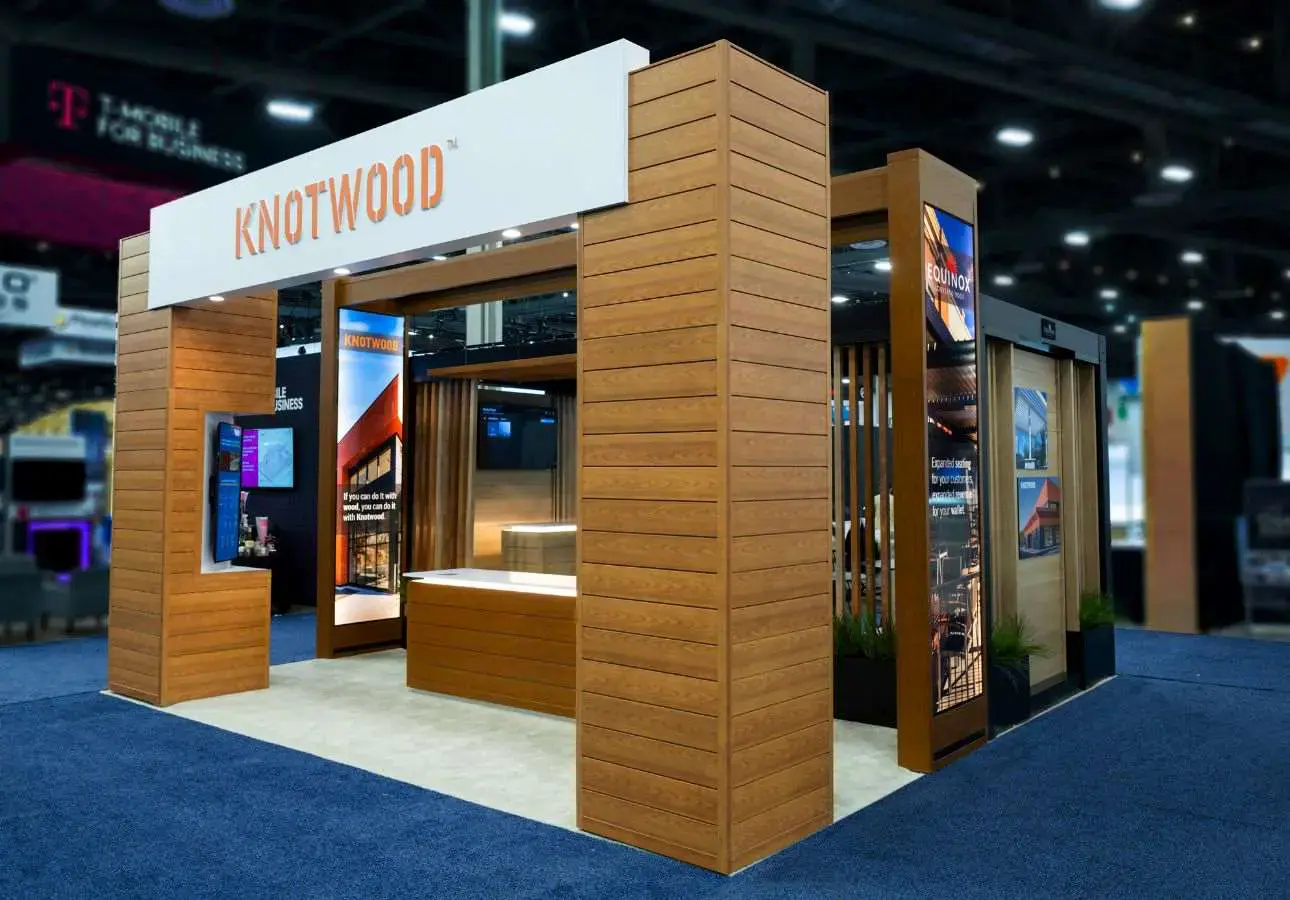
We specify materials that perform in both the Florida climate and in freight. Gulf Coast humidity and temperature swings punish cheap laminates and unsealed MDF. For exterior-visible surfaces we prefer phenolic laminates, true hardwood veneers with catalyzed finishes, or high-pressure solid-surface materials.
For frame systems, lightweight extruded aluminum with concealed connectors reduces weight and freight cost compared to welded steel, and it disassembles cleanly for reuse. We use welded steel where the design genuinely requires it — double-deck stair stringers, cantilevered hanging sign armatures, heavy kinetic elements — and we engineer those with stamped drawings.
Graphics substrates: tension fabric for large wall fields, direct-print Sintra for crisp rigid graphics, backlit fabric for illuminated hero walls, dye-sub for reusable modular graphics.
Structural engineering inside the fabrication workflow
Hanging signs, double-deck exhibits, cantilevered scenic elements, and heavy rigging all need structural engineering review before TCC will approve them. We keep a structural engineering partner on retainer so approval drawings come back inside the fabrication schedule, not after it.
Double-deck builds at TCC require stamped drawings, load calculations, stair and rail compliance, and usually an on-site engineer walk at install. With TCC's 30-foot ceilings, double-decks have good vertical clearance — but the structural engineering requirements are still rigorous.
The pre-build: we assemble the booth before it ships
Every custom booth over 10x20 gets a full pre-build before it is crated. Every panel is dry-fitted, every graphic is hung and reviewed under proper lighting, every fitting is checked, every cable run is pulled, every LED wall is powered on, every hanging sign is test-assembled at ground level.
The pre-build is where we find problems while we still have the whole shop to fix them. Clients are invited to the pre-build. It's the most useful meeting in the project.
Crating and freight for the rolling calendar
A booth crated for one show and then re-crated for the next is a booth that gets damaged. We crate for the full calendar: panel dividers sized for reuse, foam and edge protection chosen for repeat handling, crates built with casters and forklift pockets that match the venues the booth will actually travel to.
For TCC freight specifically, we size crates to the dock and hall door dimensions. We also plan freight consolidation: a Tampa show that rolls to Tampa four weeks later benefits from one carrier, one bill of lading, and one handling event.
Finish quality separates impressive from embarrassing
Tampa audiences — medical, fintech, industrial — read finish quality faster than most clients expect. Scuffed edges, mismatched laminate seams, visible fasteners, and paint inconsistencies all get discounted from across the aisle. We budget finish time the same way we budget fabrication.
For high-visibility surfaces we spray catalyzed paint in the booth, sand and re-coat rather than patch, and seal edges with matched color. For wood finishes we match grain direction across panels before assembly.
Fabrication timeline for Tampa shows
A typical custom booth for TCC runs 8 to 12 weeks of fabrication from design lock, with another 3 to 4 weeks of graphics production that overlaps the last half. Rush schedules compress this to 6 weeks and usually raise material costs 15 to 25 percent.
The compression points are (1) structural engineering sign-off for hanging and deck elements, (2) graphics release dates, and (3) carrier booking windows for show freight. We manage all three against the show's posted deadlines from project kickoff.
Custom Exhibit Fabrication frequently asked questions
Q: How long does custom exhibit fabrication take for a Tampa show?
Q: Do you build double-deck exhibits for Tampa Convention Center?
Q: Can you match a booth built by another vendor?
Q: Do you build booths we can reuse for Tampa or Tampa?
Q: What materials do you avoid in Florida?
Q: Can we visit the shop during fabrication?
Q: How do you handle graphics changes during fabrication?
Buyer Questions