
Tampa Convention Center
Tampa Convention Center is the anchor venue for Tampa's trade shows, conventions, and exhibitions. At 600,000 square feet of total meeting space with a 200,000 sq ft exhibit hall, 30-foot ceilings, and a waterfront downtown location, TCC hosts the shows that drive the Tampa Bay business calendar.
venue planning notes
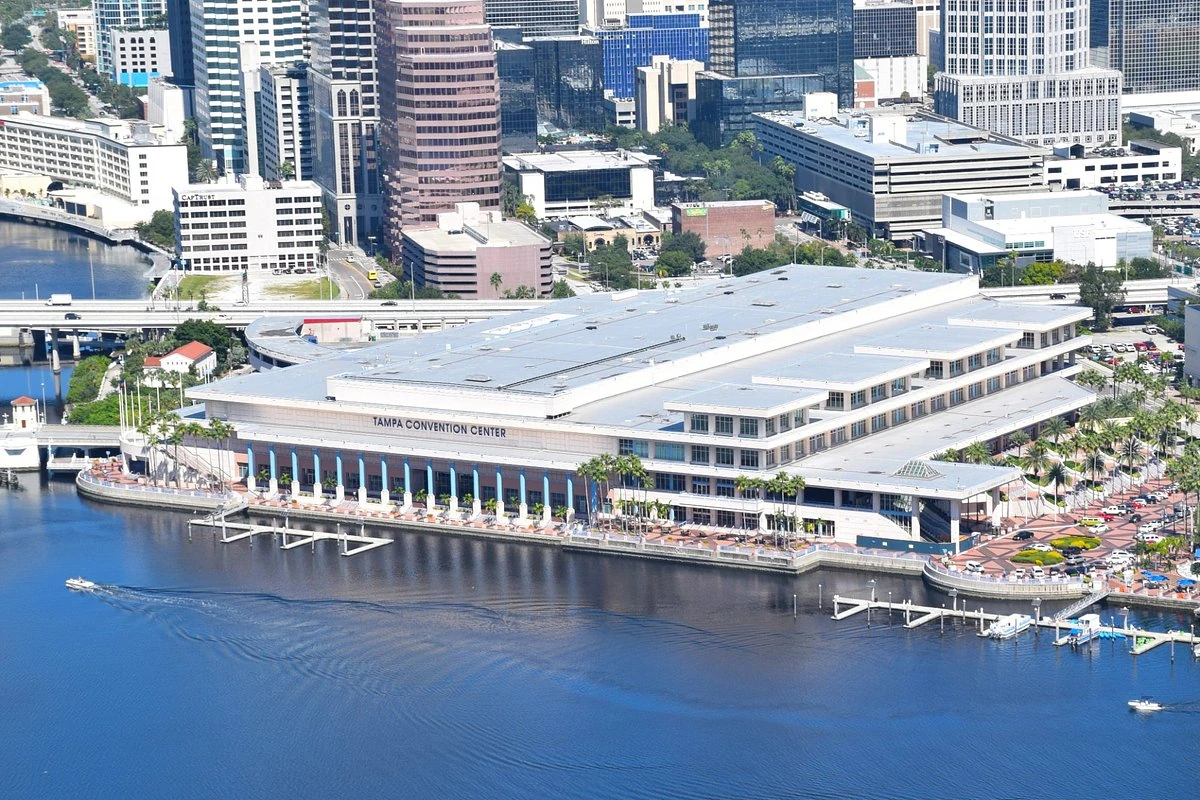
The physical building and what matters for exhibitors
The center's 200,000 sq ft exhibit hall is organized as a single large column-spaced space with 30-foot ceilings throughout. That ceiling height is significant — hanging signs, double-deck exhibits, and dramatic scenic moments are all feasible without grid-clearance concerns.
Electric, water, and compressed-air hook-ups are available on the show floor for exhibitor use. That makes TCC a strong fit for industrial demos, fluid-power expos, and manufacturing-oriented conventions where on-floor utilities drive the exhibit experience.
The 36,000 sq ft ballroom sits alongside the exhibit hall and divides into four sections. It often hosts general sessions, awards, receptions, or smaller concurrent events. Theater capacity runs up to 3,600; banquet capacity up to 2,080.
Location, access, and logistics
TCC's waterfront downtown location is both an advantage and a logistics consideration. Advantage: proximity to downtown Tampa hotels (Marriott Tampa Waterside, Embassy Suites Downtown, Sheraton Tampa Riverwalk), walkable to the Tampa Riverwalk, and connected to the broader downtown business district. Consideration: downtown Tampa has a compact street grid with traffic constraints during major events.
Tampa International Airport (TPA) is roughly 10 miles from TCC. Drive time is typically 15 to 25 minutes depending on traffic. TPA is a well-run airport with good capacity for convention-week surges, and ride-share availability from TPA to downtown is reliable.
Dock access at TCC is managed by the show's general service contractor. Freight windows are published in each show's exhibitor manual. The compact downtown location means freight staging can be tight, and routing from the dock to specific halls may require more coordination than at suburban convention centers.
Labor and services in a Florida Right to Work market
Florida is a Right to Work state. That translates into a flexible labor environment at TCC compared to convention centers in union-dominant markets. Exhibitors have broader self-handling rights for booth setup, graphics, and AV — though rigging, drayage, and centralized services still flow through the show's general service contractor.
Each show contracts with a GSC (commonly GES, Freeman, or another national provider) that governs the install floor. The GSC's published rules sit alongside TCC's own facility rules. Reading both before planning an install is the single most important pre-show step.
EAC rights vary by show. Most TCC shows allow Exhibitor-Appointed Contractors for booth assembly, graphics, AV, and non-rigged installations.
Install window realities
Install windows at TCC are typically 24 to 48 hours for standard shows and extend to 3 to 5 days for major Florida citywide conventions. Individual booth install time within that window depends on the GSC's dock schedule rotation.
Practical implication: if the show publishes a 36-hour install window, plan your actual install schedule for 24 to 28 hours of effective work time.
Strike windows are consistently tight. TCC typically needs the floor cleared within 12 to 24 hours of show close for the next event's load-in.
Common issues exhibitors encounter at TCC
Late EAC registration. Submitting EAC paperwork inside the show's 30 to 45 Day deadline is the most common cause of install-day access issues.
Rigging approval timing. Hanging signs and overhead structural elements require rigging approval. Typically 30 to 60 days for approval, longer for heavy loads requiring stamped engineering drawings.
Power draw exceeding utility order. Utility orders lock 30 days out. Adding an LED wall after that date means re-ordering power at rush rates.
Downtown freight routing. The compact downtown grid means carriers unfamiliar with Tampa sometimes misroute. Using local carriers or experienced national providers prevents this.
Shows we actively work at TCC
We run exhibits at TCC across industries: Florida medical society annual meetings, industrial and fluid-power expos, Gulf Coast business conferences, tech and fintech shows, national mid-size conventions that rotate through Tampa, and regional association meetings.
Our TCC execution spans all booth scales from 10x20 inlines to 30x50 islands with double-decks, integrated LED walls, and full AV production.
What we bring to a TCC project specifically
Local expertise. The teams supporting TCC know the dock configuration, freight routing patterns, hall access, and the GSC contacts that rotate through the building. Downtown freight timing is a local skill that saves hours.
Pre-show paperwork ownership. We handle EAC registration, rigging approval submission, utility order coordination, and COI management.
Show-hours coverage. The same team that installed your booth stays on-site through show close.
Clean closeout. Strike runs against the published window with a pre-planned sequence.
Tampa Convention Center frequently asked questions
Q: How far in advance should we start planning a TCC show?
Q: What's the best way to get freight into TCC?
Q: Is TCC union or non-union?
Q: Can we bring our own crew to TCC?
Q: What hotels are closest to TCC for show week?
Q: Is there wireless internet throughout TCC?
Buyer Questions